Empowered Ownership – Series Summary
Bringing Clarity To The Heart Of Your Family Business
When you strip away the technical language of governance, tax and succession, a family business is in essence a group of people who share ownership of something meaningful and are trying their best to work out how to manage the complexity of being in business together. That is why I chose to begin this series on the Ten Principles with Empowered Ownership. When ownership is vague or unspoken, it quietly affects everything else. When it is clear, intentional and understood, it becomes one of the strongest stabilising forces in the whole system of family, business and wealth.
Empowered ownership is not about becoming more controlling. In fact, it is almost the opposite. It is about owners gaining clarity on what their role actually is, where their decision rights begin and end, and what kind of impact they want their ownership to have. When families do this work, you tend to see a very consistent set of outcomes.
Outcomes of Empowered Ownership
Roles become clearer and less entangled with employment or board positions. Conversations feel more constructive because people understand which hat they are wearing. The right decisions start to be made in the right place. Owners focus on long term direction and purpose, the board looks after strategy and oversight, and management is trusted to run the business on a day to day basis. Boundaries strengthen in a healthy way, which means fewer surprises and a lot less second guessing.
A good starting point is to recognise that ownership is a role in its own right. Many founders never thought of themselves as “owners” at the beginning. They started a business to solve a problem or to support their family, and ownership came as a by-product. Years later, when there is something substantial to pass on, the idea of ownership suddenly matters a great deal, yet it may never have been discussed. This is often where mismatched expectations can arise. Bringing ownership into the open helps to replace those unspoken assumptions with shared understanding and a sense of stewardship.
Self Awareness key to Empowered Ownership
In the series I invited you to begin with yourself. Before talking about “our family” or “our vision”, it is powerful to ask very personal questions.
- What does owning this business or this wealth mean to me.
- What do I want this ownership to achieve.
- What responsibilities am I genuinely willing to step into, rather than simply inheriting what others assume I should do.
These kinds of questions often touch on identity, history and hopes for the future. They can feel vulnerable, but they provide a solid foundation for any collective work that follows.
Once you’ve had the chance to explore your own perspective, the conversation can move to shared purpose. Why do we, as a group, own what we own. Are we trying to preserve an asset, grow an enterprise, create opportunities for future generations, make a contribution to the wider community, or some combination of these. Purpose does not have to be poetic, but it does need to be honest. Without it, decision making can drift towards being reactive and short term. With it, families gain alignment and a sense of calm, even when the business environment is noisy.
From there, purpose can be turned into a shared vision. This is where families begin to picture the future together. Not just in terms of revenue or valuation, but in terms of what they want the family to look and feel like in ten or twenty years’ time. A clear vision often rests on a few simple ideas. What matters most to us. What we will protect even when it is inconvenient. Where we want to grow and innovate. How we want to work together when we disagree. When such a vision is articulated, the board and management suddenly have a strong reference point for their own planning and leadership.
Values or Behaviours?
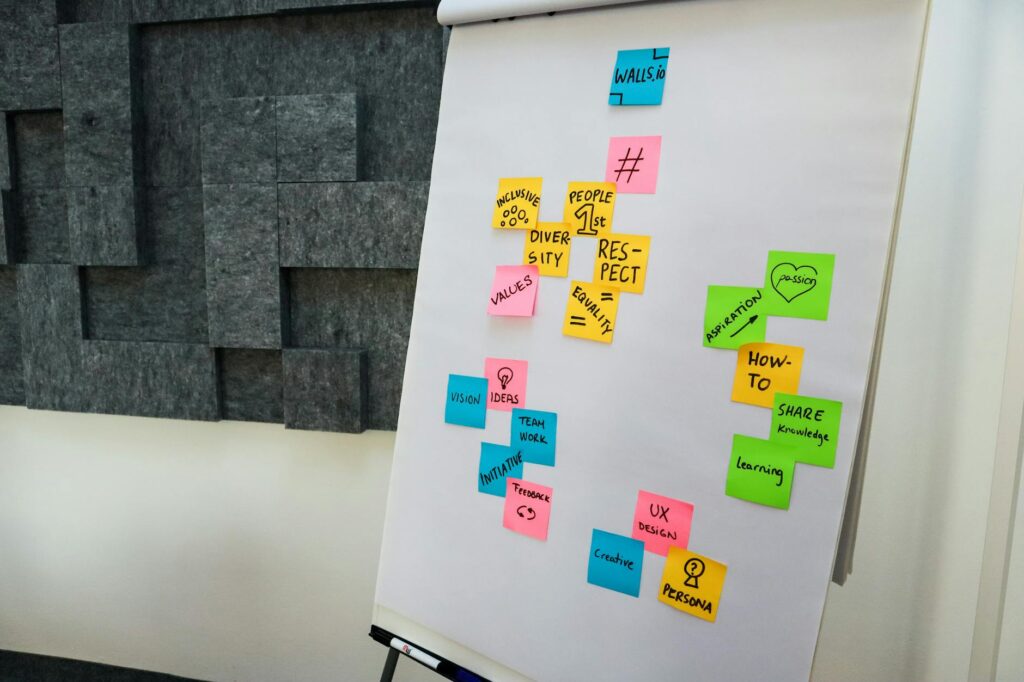
Values and behaviours then give that vision texture. Many families have a list of values somewhere, but have never really asked what those words look like in practice. Respect, for example, might mean not interrupting in meetings, or not sending critical emails late at night. Stewardship might show up as taking a long term view on investment decisions even when a short term gain is tempting. Transparency might mean agreeing how and when information is shared between siblings or branches, rather than assuming everyone has the same appetite for detail. Behaviour shapes culture far more than any set of statements on a website. The more explicit a family becomes about “how we do things here”, the easier it is for owners, directors and managers to pull in the same direction.
Listen to the episode here:
A key part of empowered ownership is also the willingness to define and respect decision rights and decision making processes. In a healthy structure, owners reserve a small number of big decisions, such as the overall purpose of ownership, major changes in ownership, very large transactions or fundamental changes to the nature of the business. The board then takes responsibility for strategy, risk and holding management to account. Management leads the organisation day by day.
When those responsibilities are clear and owners genuinely delegate, energy returns to the system. People know where they stand. The business can move at the pace it needs to, without constant checking back or unintended interference.
To support all of this, ownership needs its own space. Many families fall into the habit of having ownership conversations at the kitchen table, after board meetings, or at Christmas. It is understandable, but it rarely works well. Creating an owners’ forum, or for larger groups an ownership council, gives those conversations a proper home.
It creates a rhythm where owners can meet to reflect on purpose, review decisions, and stay aligned, without slipping into operational detail or turning every family gathering into a meeting. This separation is not about hierarchy. It is about healthy boundaries and about giving each part of the system what it needs in order to function well.
If there is a single message that I hope comes through from the series, it is that empowered ownership is about clarity rather than control. It is about creating the conditions in which governance, leadership and family relationships can all flourish over time. Aligned ownership is one of the strongest predictors of continuity. Misaligned ownership is one of the greatest risks.